










What is Carotid Endarterectomy?
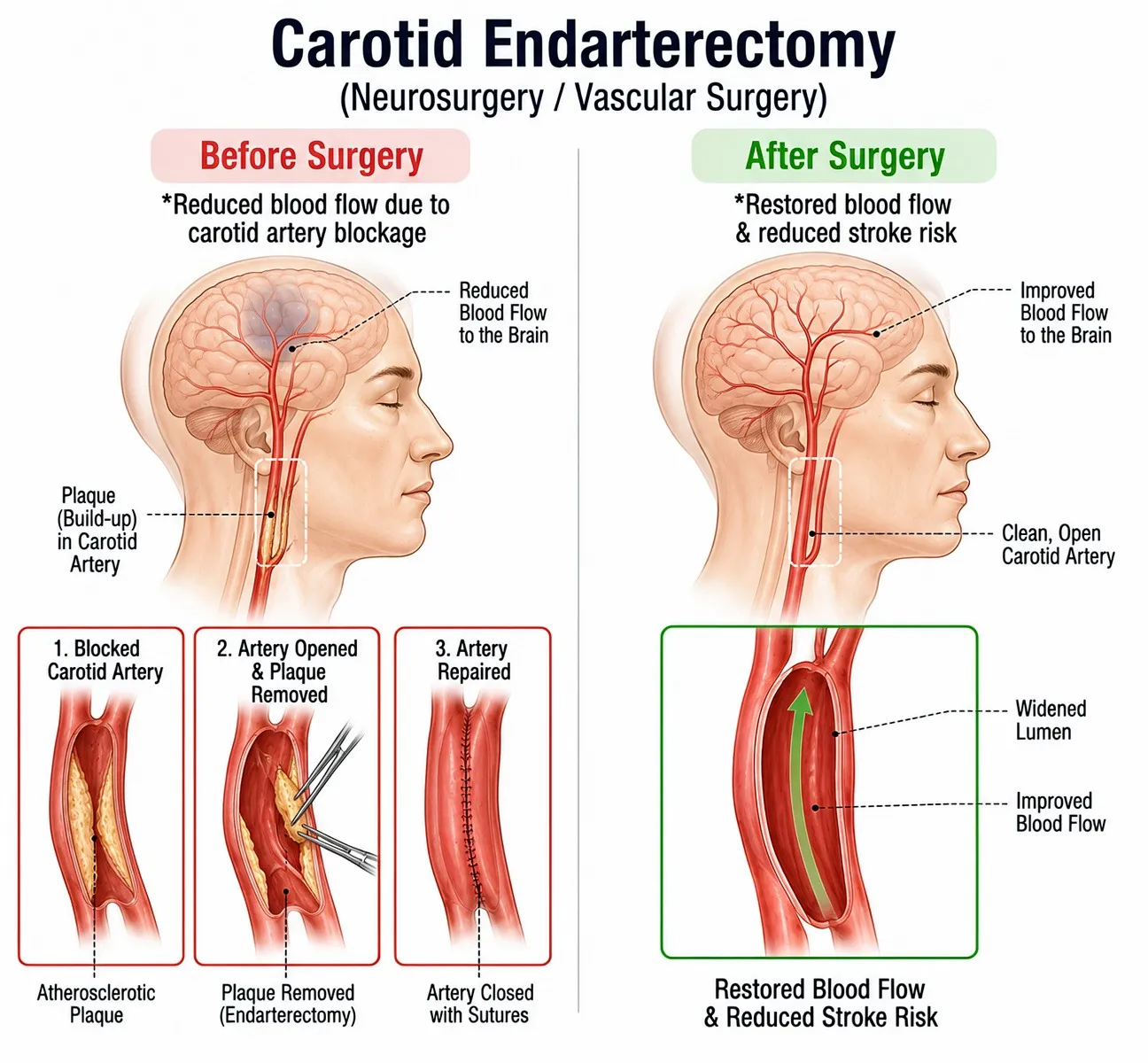
Carotid Endarterectomy is a proven surgical intervention aimed at cleaning the major arteries in the neck that supply blood to the brain. Over time, cholesterol, calcium, and fibrous tissue form atherosclerotic plaque, narrowing the carotid vessel (carotid artery stenosis). Surgery removes this inner diseased lining, restoring unobstructed arterial blood flow.
Who Needs Carotid Endarterectomy?
CEA is indicated for patients with high-grade carotid stenosis to mitigate the risk of transient ischemic attacks (TIAs or 'mini-strokes') and major disabling ischemic strokes.
Key clinical indicators include:
- Symptomatic carotid stenosis >50-70% with recent history of TIA, amaurosis fugax (temporary loss of vision in one eye), or minor stroke.
- Asymptomatic severe carotid stenosis >70-80% identified on routine screening ultrasound or CT angiography.
- High-risk plaque morphology showing ulceration, thrombus formation, or rapid progression on diagnostic imaging.
Types of Surgical Approaches
- Standard Carotid Endarterectomy: Longitudinal incision along the carotid artery, plaque removal, and arteriotomy closure using a synthetic or vein patch.
- Eversion Carotid Endarterectomy: Transection of the internal carotid artery at its origin, eversion of the arterial wall to peel away plaque, and re-implantation.
- Carotid Artery Stenting (CAS): An endovascular catheter-based alternative inserting a metallic stent, typically reserved for high surgical risk patients.
Benefits of Carotid Endarterectomy
- Over 60-80% reduction in long-term stroke risk in symptomatic high-grade stenosis.
- Restoration of physiological cerebral blood flow without leaving permanent intravascular metal hardware.
- Proven long-term durability with low risk of recurrent stenosis (<5%).
- Gold-standard treatment established by extensive international clinical trials (NASCET / ECST).
What to Expect Before Surgery?
Pre-operative preparation focuses on cardiovascular safety:
- Diagnostic Vascular Imaging: Carotid Doppler ultrasound, CT Angiography (CTA), or MR Angiography (MRA).
- Cardiac Evaluation: Electrocardiogram (ECG), echocardiogram, and cardiology clearance due to frequent co-existing coronary artery disease.
- Blood Pressure & Antiplatelet Management: Optimization of blood pressure medications and timing instructions for aspirin or clopidogrel.
Complete Procedure
The surgical steps involve:
- Administration of general or regional cervical block anesthesia.
- Making a oblique skin incision along the anterior border of the sternocleidomastoid muscle in the neck.
- Dissecting and carefully exposing the common, internal, and external carotid arteries.
- Temporary clamping of the carotid vessels (using a temporary bypass shunt if cerebral blood flow monitoring warrants it).
- Opening the artery (arteriotomy) and carefully stripping out the obstructive plaque core.
- Flushing the vessel, suturing a patch (dacron, PTFE, or autologous vein) to close the artery, restoring flow, and placing a surgical drain before skin closure.
What to Expect During Surgery?
The operation takes approximately 1.5 to 2.5 hours. Electroencephalography (EEG) or stump pressure monitoring is used to observe brain perfusion while the artery is clamped.
Endarterectomy vs Stenting
| Feature | Surgical Endarterectomy (CEA) | Carotid Artery Stenting (CAS) |
|---|---|---|
| Approach | Open surgical neck incision. | Minimally invasive groin/radial puncture. |
| Plaque Handling | Physical excision and removal of plaque. | Plaque compressed against wall with stent insertion. |
| Minor Stroke Risk (Perioperative) | Lower in elderly (>70 years) patients. | Slightly higher periprocedural embolization risk in older calcified arteries. |
| Recovery Time | 2-3 days hospital stay. | 1-2 days hospital stay. |
Success Rate and Safety
Carotid Endarterectomy is a safe and durable procedure. Major stroke and mortality complication rates in experienced neurovascular centers are under 2-3% for symptomatic patients and under 1% for asymptomatic patients.
Carotid Endarterectomy Cost Estimate
| Procedure Type | Standard CEA (INR) | CEA with Patch Reconstruction (INR) |
|---|---|---|
| Unilateral Carotid Endarterectomy | ₹2,00,000 - ₹3,50,000 | ₹2,50,000 - ₹4,50,000 |
| Complex / Re-operative CEA | ₹3,00,000 - ₹4,50,000 | ₹3,50,000 - ₹5,50,000 |
Disclaimer: Costs depend on anesthesia type, ICU stays, cardiovascular co-morbidities, and choice of synthetic patch materials.
Recovery Guide & Post-Operative Care
Recovery Timeline
- Day 0-1: ICU / High Dependency monitoring of blood pressure, neurological checks, and neck drain monitoring.
- Day 2: Removal of neck drain; patient ambulatory and transitioning to regular diet.
- Day 3-4: Hospital discharge after confirming blood pressure stability.
- Week 2-4: Suture/staple removal; gradual resume of non-strenuous daily activities.
Post-Op Precautions & Care
- Blood Pressure Control: Strict compliance with blood pressure medications is critical to prevent hyperperfusion syndrome or bleeding.
- Wound Observation: Watch for swelling in the neck, difficulty swallowing, or breathing changes.
- Antiplatelet Therapy: Lifelong adherence to prescribed aspirin or anti-platelet therapy.
- Routine Ultrasound Surveillance: Follow-up carotid Doppler at 6 months and yearly thereafter.
Frequently Asked Questions
How long does a carotid endarterectomy take?⌄
The surgical procedure usually takes between 1.5 and 2.5 hours, plus setup and anesthesia time.
Will I have a visible scar on my neck?⌄
The incision is typically made along natural skin folds in the neck. Over 6 to 12 months, the scar fades significantly and becomes minimally noticeable.
What is the difference between carotid endarterectomy and carotid stenting?⌄
Endarterectomy physically cuts open the artery to remove the plaque, while stenting uses a catheter from the groin to place a wire mesh tube that presses plaque against the artery wall.
Can carotid plaque return after surgery?⌄
Restenosis (re-narrowing) occurs in less than 5% of patients. Maintaining healthy cholesterol, blood pressure, and non-smoking habits prevents recurrent plaque formation.
When can I drive after carotid surgery?⌄
Most patients can safely drive in 1 to 2 weeks once neck stiffness subsides and full head-turning mobility is regained.