





What is Anal Fistula Surgery?
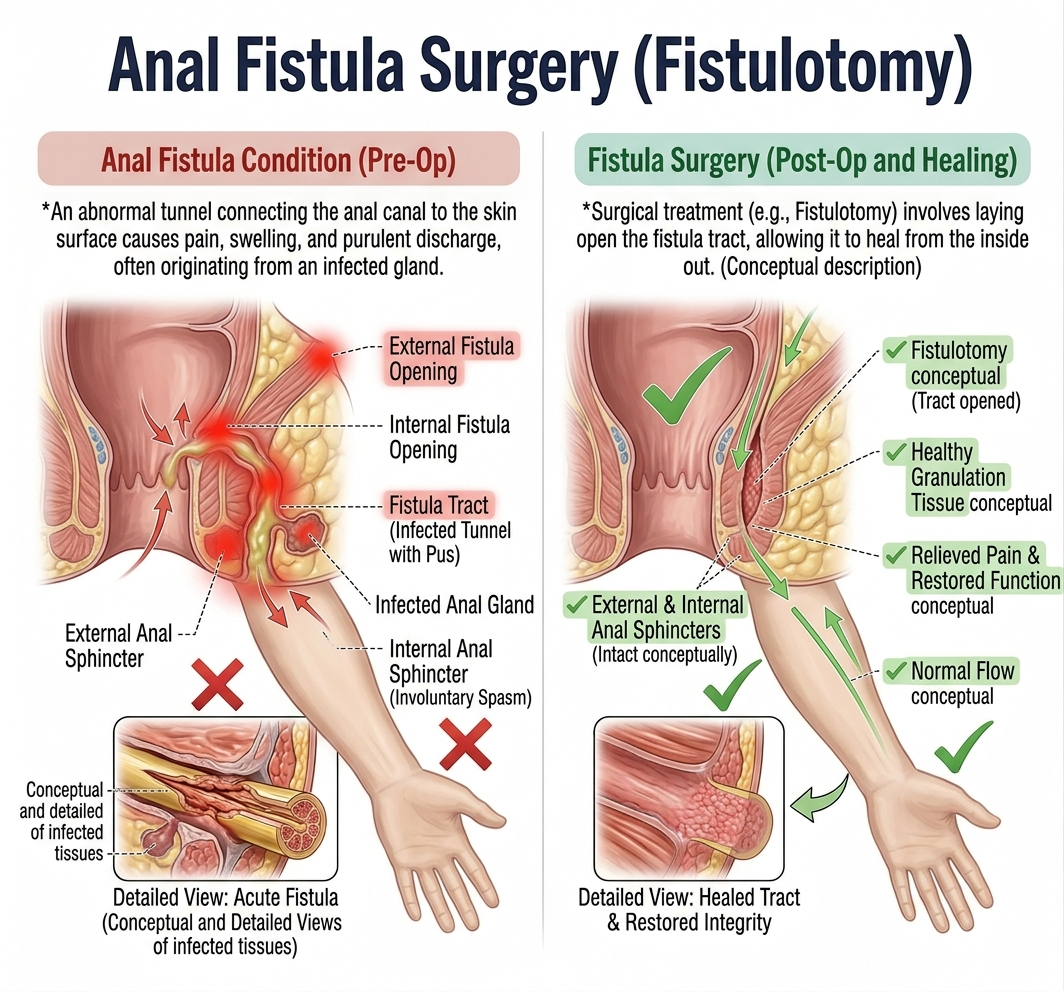
An anal fistula is an abnormal, infected tunnel-like connection between the inside of the anal canal and the outer skin around the anus. It typically develops following an unhealed anorectal abscess. Surgery aims to eradicate the fistula tract completely, facilitate tissue healing, and preserve the anal sphincter muscles responsible for bowel continence.
Who Needs Anal Fistula Surgery?
Anal fistulas rarely heal spontaneously with medication alone and almost always require surgical repair.
Key clinical indicators include:
- Persistent or recurrent pus, foul-smelling discharge, or blood drainage from an opening near the anus.
- Recurrent painful perianal swellings or abscesses.
- Constant irritation, itching, and throbbing pain around the anal opening.
- High-complex fistula tracts identified on MRI Fistulogram.
Types of Anal Fistula Procedures
- FiLaC (Fistula Laser Closure): A flexible 360° emission laser probe is inserted into the tract to thermally collapse and seal the tunnel without cutting sphincter muscles.
- Fistulotomy: Unroofing and opening the entire fistula tract to allow healing from the base upwards (ideal for low, simple fistulas).
- LIFT (Ligation of Intersphincteric Fistula Tract): Procedure specifically designed for complex, high fistulas to isolate and tie off the internal tract between muscle layers.
- Seton Placement: A surgical thread placed through complex fistula tracts to drain infection gradually prior to definitive repair.
- Advancement Flap: Covering the internal fistula opening with healthy rectal tissue flap for complex recurrent fistulas.
Sphincter Preservation Principle: The primary goal in modern fistula surgery is eradicating infection without causing fecal incontinence.
Benefits of Anal Fistula Surgery
- Permanent closure of chronic draining infected sinuses.
- Sphincter-sparing laser techniques preserve full bowel control (continence).
- Relief from chronic perianal pain, skin irritation, and foul discharge.
- Minimal scarring and low risk of recurrence.
What to Expect Before Surgery?
- MRI Fistulogram: High-resolution imaging to map internal/external openings, sphincter muscle involvement, and secondary branching tracts.
- Infection Management: Antibiotic course to clear active surrounding tissue infection.
- Bowel Cleansing: Mild laxatives or enemas given prior to surgery.
Complete Procedure
The FiLaC (Fistula Laser Closure) technique follows these steps:
- Administration of spinal or general anesthesia.
- Careful probing and cleaning (curettage) of the fistula tract to clear infected debris.
- Insertion of the flexible FiLaC laser fiber through the external opening up to the internal opening.
- Controlled firing of 360° laser energy as the fiber is slowly withdrawn at a rate of 1 mm per second.
- Thermal destruction of the infected epithelial lining causes tissue shrinkage and complete closure of the tract.
- Suture closure of the internal mucosal opening.
What to Expect During Surgery?
The procedure takes 30 to 45 minutes. Laser and LIFT techniques do not leave large open wounds, minimizing postoperative pain and dressing requirements.
Laser (FiLaC) vs Traditional Fistulotomy
| Feature | FiLaC Laser Surgery | Traditional Fistulotomy |
|---|---|---|
| Sphincter Damage | Zero risk (100% sphincter preserving) | Small risk in high complex fistulas |
| Open Wound | No large open wound | Open wound requiring daily packing |
| Wound Healing Time | 1 - 2 weeks | 6 - 8 weeks |
| Pain Level | Mild | Moderate to severe |
Success Rate and Safety
Low simple fistulas have a surgical success rate of >95%. Complex fistulas treated with modern laser/LIFT procedures achieve success rates of 85-90% with near-zero risk of incontinence.
Anal Fistula Surgery Cost Estimate
| Surgical Technique | Estimated Cost (INR) |
|---|---|
| Conventional Fistulotomy / Seton Placement | ₹50,000 - ₹80,000 |
| LIFT Procedure for Complex Fistula | ₹70,000 - ₹1,30,000 |
| Advanced FiLaC Laser Closure | ₹85,000 - ₹2,00,000 |
Disclaimer: Complex multi-branched fistulas or recurrent cases requiring MRI mapping and specialized probes incur higher costs.
Recovery Guide & Post-Operative Care
Recovery Timeline
- Day 0-1: Discharge from hospital; oral pain relievers prescribed.
- Week 1: Resumption of light daily work; daily warm sitz baths.
- Week 2-3: Drainage from external opening significantly decreases and stops.
- Week 4-6: Complete tissue regeneration and internal tract sealing.
Post-Op Precautions & Care
- Hygiene & Sitz Baths: Perform warm sitz baths 2-3 times daily to clean the perianal region.
- Prevent Constipation: Take laxatives and high-fiber supplements to pass soft stools easily.
- Absorbent Pads: Use clean gauze pads over the area to absorb minor wound discharge during initial days.
- Follow-up Imaging: Attend clinical evaluations to ensure complete internal healing.
Frequently Asked Questions
Can an anal fistula heal with antibiotics alone?⌄
No. Antibiotics can treat surrounding infection or abscesses, but the structural fistula tract requires surgical or laser closure to heal.
What is the advantage of laser fistula surgery (FiLaC)?⌄
FiLaC laser surgery seals the tract from inside without cutting the anal sphincter muscles, ensuring zero risk of fecal incontinence and minimal pain.
Why is an MRI Fistulogram necessary before surgery?⌄
An MRI provides a 3D anatomical map of the fistula tract, identifying hidden branches and its relationship with sphincter muscles so surgeons can plan the safest procedure.
Is daily wound packing required after laser surgery?⌄
No. Unlike conventional fistulotomy which leaves open wounds requiring painful daily packing, laser closure leaves no large open wound.
What are the chances of fistula recurrence?⌄
With precise surgical mapping and modern laser/LIFT techniques, recurrence rates are low (around 5-10% for complex fistulas).