




What is Heart Transplant Surgery?
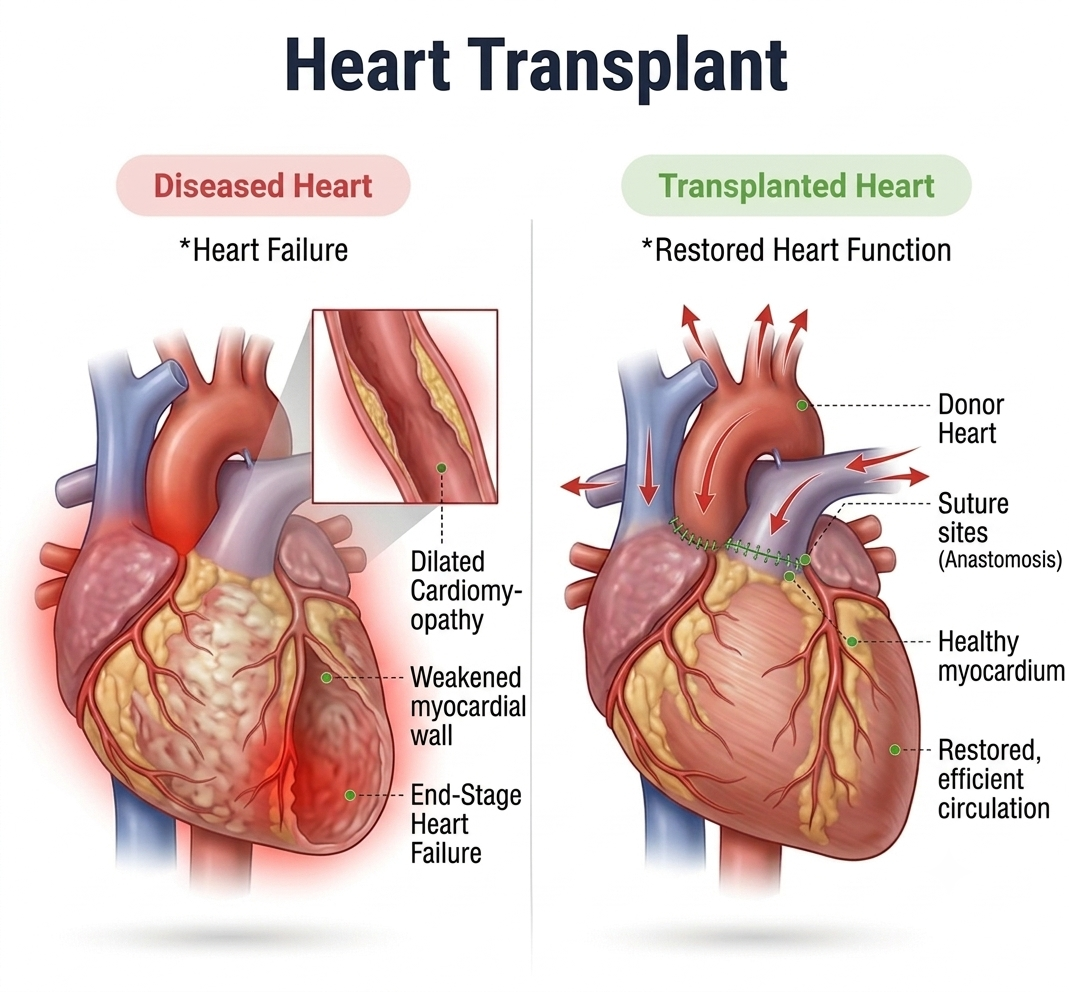
Heart transplantation is an orthotopic open-heart surgical procedure performed to replace a patient's diseased heart with a healthy donor heart. It is reserved for patients with advanced, irreversible end-stage heart disease where maximum medical therapy, coronary interventions, or cardiac surgeries have proven insufficient.
Who Needs a Heart Transplant?
Surgery is indicated for end-stage heart failure (NYHA Class III/IV) with a life expectancy of less than 1 year without surgical intervention.
Key clinical indicators include:
- End-stage Dilated or Ischemic Cardiomyopathy with Left Ventricular Ejection Fraction (LVEF) < 20%.
- Severe, untreatable Coronary Artery Disease with intractable angina.
- Inoperable Congenital Heart Disease or severe valvular disease.
- Recurrent, life-threatening ventricular arrhythmias unresponsive to catheter ablation or ICD placement.
- Dependence on continuous intravenous inotropic support or Mechanical Circulatory Support (LVAD).
Types of Heart Transplant Procedures
- Orthotopic Heart Transplantation (Standard): Removal of the diseased heart except for parts of the atrium, and attachment of the donor heart in its normal anatomical position.
- Heterotopic Heart Transplantation (Piggyback): The donor heart is connected alongside the recipient's native heart to assist it (rarely performed today).
- Combined Heart-Lung Transplantation: Simultaneous replacement of both the heart and lungs in complex cardiopulmonary end-stage disease.
Donor Availability Note: Organ allocation is coordinated through national or state organ registries (e.g., NOTTO/TRANSTAN in India) based on medical urgency, blood group match, and body size compatibility.
Benefits of Heart Transplant Surgery
- Dramatic improvement in overall life expectancy and quality of life.
- Complete resolution of severe breathlessness, chronic fatigue, and fluid retention.
- Ability to return to active daily life, light recreational activities, and work.
- Elimination of continuous hospital admissions for acute decompensated heart failure.
What to Expect Before Surgery?
Given that organ availability is unpredictable, pre-transplant readiness is critical:
- Comprehensive Transplant Evaluation: Assessment of pulmonary vascular resistance, kidney/liver function, and psychological readiness.
- Waitlist Placement: Active listing on the organ registry upon clearing cardiac and systemic evaluations.
- Call for Surgery: Once a compatible brain-dead donor heart becomes available, the recipient is called immediately to the transplant center.
- Fast-Track Surgical Preparation: Pre-op blood crossmatching, chest X-rays, and immediate fasting.
Complete Procedure
The surgical procedure follows these essential steps:
- Administration of general anesthesia and placement on continuous invasive monitoring lines.
- Median sternotomy (opening the chest through the breastbone).
- Connecting the patient to a Heart-Lung Machine (Cardiopulmonary Bypass) to maintain circulation and oxygenation.
- Excision of the recipient's failing heart, leaving posterior atrial walls and major blood vessels intact.
- Suturing the donor heart into place (connecting left/right atria, aorta, and pulmonary artery).
- Re-warming the body and allowing blood flow to restore cardiac electrical activity (defibrillation if required).
- Weaning off cardiopulmonary bypass, placing epicardial pacing wires, closing the sternum with steel wires, and skin closure.
What to Expect During Surgery?
The surgery takes approximately 4 to 8 hours. A surgical team harvests the donor heart while a simultaneous cardiac surgical team prepares the recipient. The donor heart is kept on ice and must be implanted within 4 hours of retrieval (ischemic time).
Heart Transplant vs LVAD (Heart Pump)
| Feature | Heart Transplant | Left Ventricular Assist Device (LVAD) |
|---|---|---|
| Nature | Biological organ replacement | Mechanical heart pump |
| Organ Dependency | Requires matched brain-dead donor | Available off-the-shelf |
| Lifelong Therapy | Immunosuppressive drugs | Anticoagulation (blood thinners) & external battery pack |
| Primary Indication | Definitive cure for heart failure | Bridge to transplant or destination therapy |
Success Rate and Safety
1-year survival after heart transplantation exceeds 85-90%, with 5-year survival rates approaching 70-75%. Long-term outcomes depend on preventing organ rejection and managing infection risks.
Heart Transplant Surgery Cost Estimate
| Component | Estimated Cost (INR) |
|---|---|
| Pre-transplant Evaluation & Registry Listing | ₹1,50,000 - ₹3,00,000 |
| Donor Harvesting, Organ Retrieval & Surgery | ₹18,00,000 - ₹25,00,000 |
| ICU, Ventilator & Post-op Hospitalization | ₹5,00,000 - ₹10,00,000 |
| Total Estimated Cost | ₹20,00,000 - ₹35,00,000 |
Disclaimer: Total costs vary depending on ICU days, donor transport distance (air ambulance costs extra), and post-op rejection treatments.
Recovery Guide & Post-Operative Care
Recovery Timeline
- Days 1-5: Intensive Care Unit (ICU) stay; extubation within 24-48 hours; continuous cardiac monitoring.
- Days 6-14: Step-down ward care; initiation of active cardiac rehabilitation and walking.
- Month 1-3: Routine outpatient visits; periodic endomyocardial biopsies to monitor for tissue rejection.
- Month 3-6: Resumption of driving, office work, and light exercise programs.
Post-Op Precautions & Care
- Strict Medication Compliance: Never miss a dose of immunosuppressants (Tacrolimus/Mycophenolate/Steroids).
- Endomyocardial Biopsies: Attend all scheduled heart biopsies to detect asymptomatic early organ rejection.
- Infection Controls: Avoid crowded places and wear protective masks during the first 6 months.
- Sternal Healing: Refrain from heavy lifting (>5 kg) or pushing/pulling for 8-12 weeks post-surgery.
Frequently Asked Questions
How long is the waiting time for a donor heart?⌄
Waiting times vary from a few weeks to over a year depending on donor availability, blood group, body size, and national organ registry priority status.
How long does a transplanted heart last?⌄
Many heart transplant recipients live 15 to 20+ years with their new heart when strict medication and lifestyle guidelines are followed.
Will I need to take anti-rejection medicines forever?⌄
Yes, lifelong immunosuppressive therapy is required to prevent your body's immune system from recognizing and attacking the donor heart.
How do doctors check if my body is rejecting the heart?⌄
Transplant cardiologists perform routine catheter-based endomyocardial biopsies during the first year to detect cellular or antibody rejection before symptoms occur.
Can I exercise after a heart transplant?⌄
Yes! Structured cardiac rehabilitation begins in the hospital. Most patients can walk, swim, cycle, and participate in recreational sports after full recovery.