

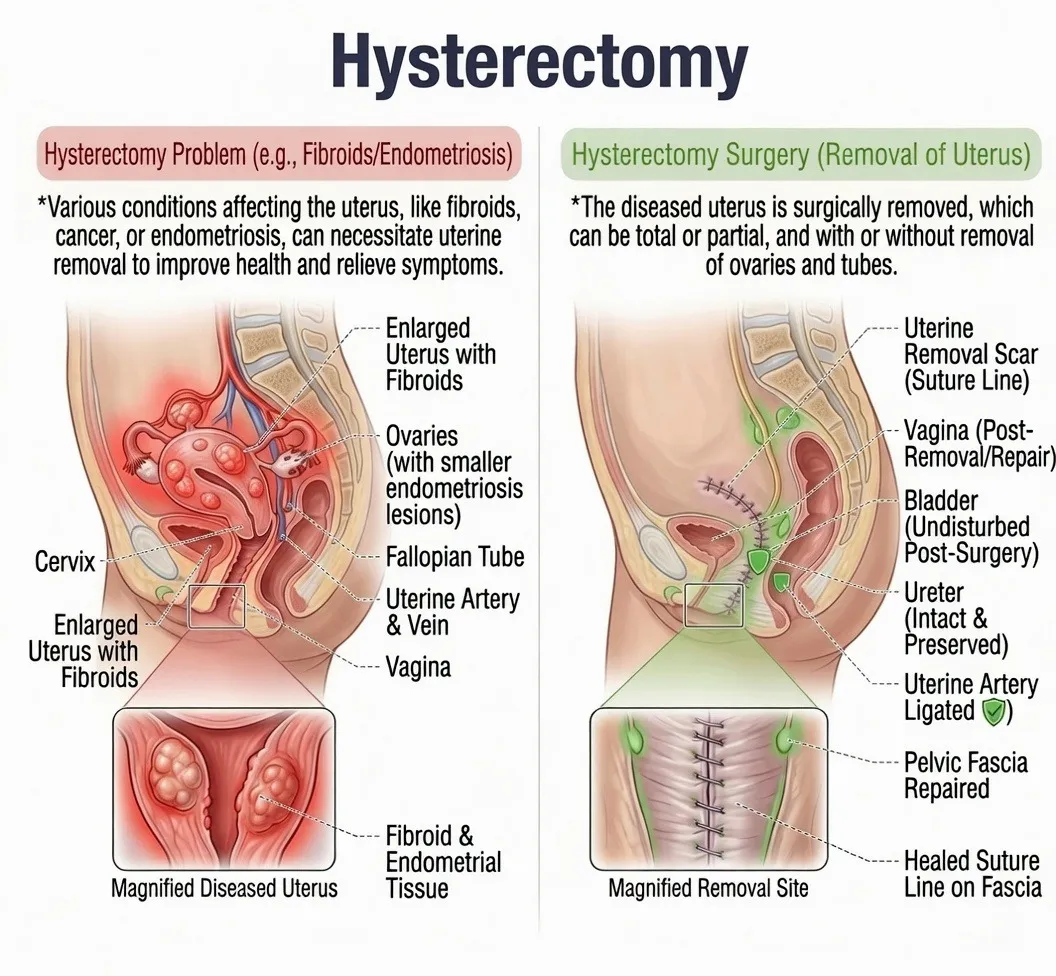










What is Hysterectomy?
A hysterectomy is a surgical procedure to remove the uterus (womb). Depending on the underlying medical condition, the surgery may also involve removing the cervix, ovaries (oophorectomy), and fallopian tubes (salpingectomy). It provides a definitive solution for chronic pelvic conditions that have not responded to conservative medical management.
Who Needs a Hysterectomy?
A hysterectomy is recommended when non-surgical or less invasive options fail to manage debilitating symptoms, or in cases of gynaecological malignancy.
Key clinical indicators include:
- Large or symptomatic uterine fibroids causing severe pain or heavy bleeding.
- Severe endometriosis or adenomyosis causing chronic pelvic pain.
- Uterine prolapse leading to pelvic pressure or urinary dysfunction.
- Uncontrolled, abnormal uterine bleeding unresponsive to medication.
- Gynaecological cancers (cervical, uterine, or ovarian cancer) or precancerous lesions.
Types of Hysterectomy
- Total Hysterectomy: Removal of both the uterus and the cervix.
- Subtotal (Partial) Hysterectomy: Removal of the upper body of the uterus while leaving the cervix intact.
- Radical Hysterectomy: Removal of the uterus, cervix, upper vagina, and surrounding tissue (typically for cancer cases).
- Total Hysterectomy with Bilateral Salpingo-Oophorectomy: Removal of the uterus, cervix, fallopian tubes, and both ovaries.
Benefits of Hysterectomy
- Permanent relief from chronic pelvic pain and severe heavy menstrual bleeding.
- Effective treatment and staging for gynaecological cancers.
- Elimination of uterine fibroid and adenomyosis symptoms.
- Resolution of pelvic organ prolapse pressure and discomfort.
What to Expect Before Surgery?
Preparation involves essential medical steps to ensure safety and smooth recovery:
- Medical Clearance: Blood tests, pelvic ultrasound/MRI, ECG, and chest X-ray for anesthesia clearance.
- Pre-Op Evaluation: Pap smear and endometrial biopsy to rule out unsuspected pathology.
- Bowel Preparation: Fasting for 8-12 hours prior to surgery; a mild laxative or enema may be recommended.
- Medication Adjustments: Temporarily stopping blood thinners and certain herbal supplements as directed.
Complete Procedure
The surgical procedure generally follows these steps:
- Administration of general or regional (spinal/epidural) anesthesia.
- Gaining surgical access via laparoscopy, robotic instruments, vaginal approach, or open abdominal incision.
- Dissecting and ligating blood vessels, ligaments, and tissue attachments supporting the uterus.
- Carefully detaching the uterus from the bladder and rectum.
- Removing the uterus through small abdominal incisions (morcellation/laparoscopy) or the vaginal canal.
- Closing the vaginal cuff (if cervix removed) and securing surrounding ligaments for pelvic support.
- Closing surgical incisions with dissolvable sutures or staples and applying sterile dressings.
What to Expect During Surgery?
The procedure typically takes 1 to 2.5 hours depending on the surgical technique used (laparoscopic vs open) and complexity. Vital signs are continuously monitored. Post-procedure, you will recover in a post-anesthesia care unit before transfer to your room.
Laparoscopic vs Open Hysterectomy
| Feature | Laparoscopic / Robotic Hysterectomy | Open Abdominal Hysterectomy |
|---|---|---|
| Incision Size | Keyhole incisions (0.5–1 cm). | Single large incision (10–15 cm). |
| Hospital Stay | 1 to 2 Days. | 3 to 5 Days. |
| Recovery Time | 2 to 3 Weeks. | 6 to 8 Weeks. |
| Post-Op Pain | Minimal to moderate. | Moderate to severe. |
Success Rate and Safety
Hysterectomy is one of the most common and safest surgical procedures globally, with satisfaction rates exceeding 90–95% for symptom relief. Complication rates are low, especially with minimally invasive laparoscopic and robotic approaches.
Hysterectomy Cost Estimate
| Procedure Approach | Estimated Cost Range (INR) |
|---|---|
| Vaginal / Conventional Laparoscopic Hysterectomy | ₹1,20,000 - ₹2,50,000 |
| Robotic-Assisted Hysterectomy | ₹2,20,000 - ₹3,50,000+ |
| Open Abdominal Hysterectomy | ₹1,00,000 - ₹2,00,000 |
Disclaimer: Estimated costs depend on hospital stay, room category, patient co-morbidities, surgical approach, and necessity of ovary/lymph node removal.
Recovery Guide & Post-Operative Care
Recovery Timeline
- Day 0-1: Early mobilization; assistance with walking to prevent blood clots.
- Week 1-2: Rest at home; light short walks; minimal physical strain.
- Week 3-4: Gradual resumption of light daily chores; driving permitted if pain-free and off narcotics.
- Week 6-8: Complete healing of vaginal cuff; clearance for lifting heavy objects, exercise, and sexual intercourse.
Post-Op Precautions & Care
- No Heavy Lifting: Avoid lifting objects over 5 kg for at least 6 weeks.
- Pelvic Rest: Avoid tampons, douching, and sexual intercourse for 6 to 8 weeks.
- Wound Hygiene: Keep incision sites clean and dry; monitor for signs of redness or fluid discharge.
- Hormone Therapy: Discuss estrogen replacement therapy with your doctor if ovaries were removed prior to natural menopause.
Frequently Asked Questions
Will a hysterectomy cause immediate menopause?⌄
Surgical menopause only occurs immediately if both ovaries are removed during the procedure. If your ovaries are preserved, you will no longer have periods, but hormonal menopause will happen naturally later in life.
How long is the recovery after a laparoscopic hysterectomy?⌄
Most women recover within 2 to 3 weeks after laparoscopic surgery, compared to 6 to 8 weeks required for open abdominal surgery.
Can I still have sex after a hysterectomy?⌄
Yes. Once cleared by your doctor (typically 6 to 8 weeks post-surgery), sexual activity can be resumed. Most women report no change or an improvement in sexual satisfaction due to pain relief.
Will I have a visible scar?⌄
Laparoscopic and robotic hysterectomies leave small keyhole scars that fade significantly. Vaginal hysterectomies leave no external abdominal scars.
Can a hysterectomy cure uterine fibroids permanently?⌄
Yes. Because the uterus is removed entirely, uterine fibroids cannot recur.