

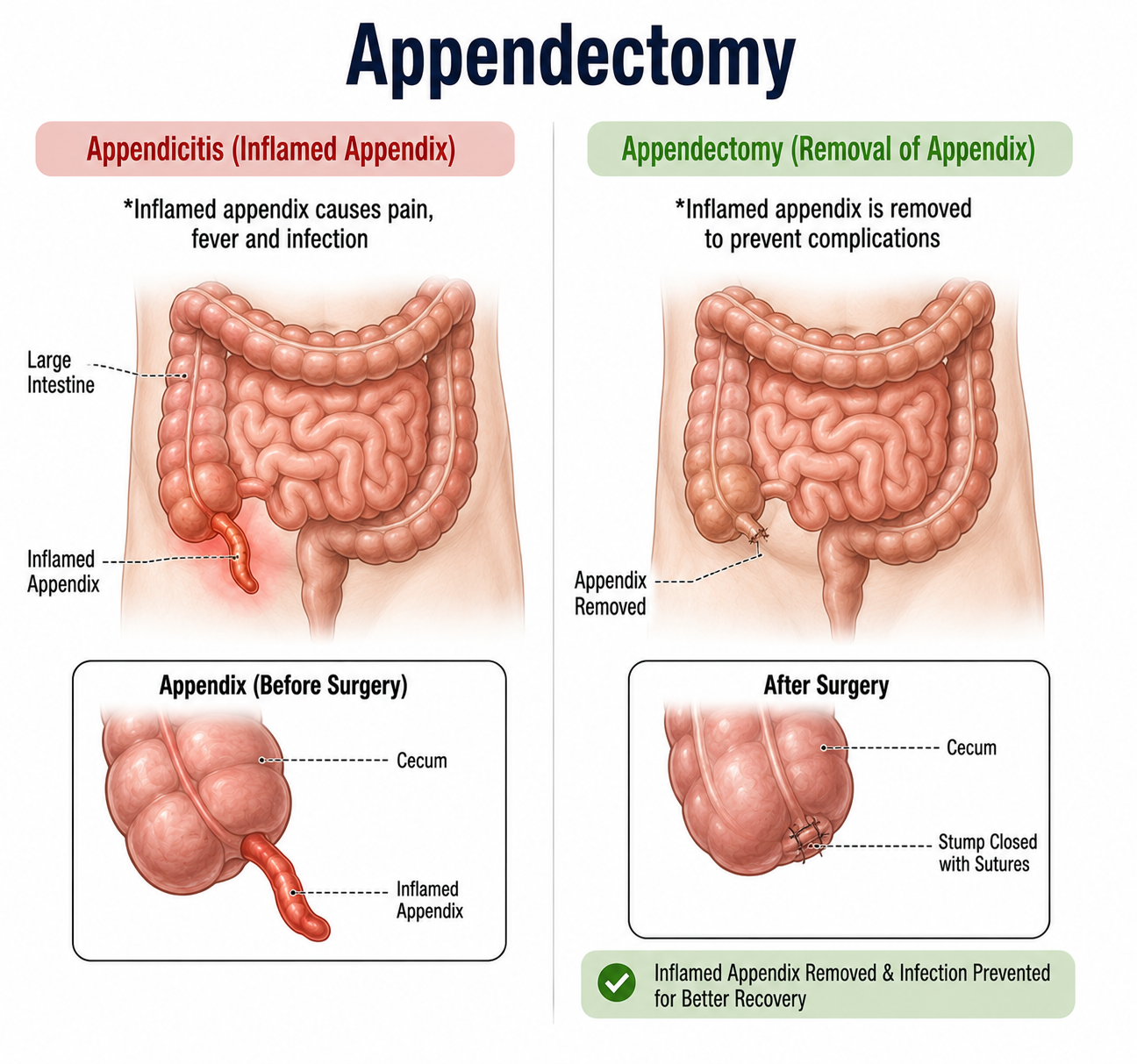










What is a Laparoscopic Appendectomy?
A Laparoscopic Appendectomy is a minimally invasive surgical procedure used to remove the appendix when it becomes acutely inflamed or infected (a condition known as appendicitis). Instead of a single large incision, the surgeon creates 2 to 3 tiny incisions to insert a laparoscope (a small camera) and specialized surgical instruments to detach and extract the appendix safely.
Who Needs an Appendectomy?
Appendicitis is an acute emergency. Prompt surgical removal is necessary to prevent the appendix from rupturing, which could lead to severe intra-abdominal infections such as peritonitis or pelvic abscesses.
Key clinical indicators include:
- Sudden, severe pain starting around the navel and shifting to the lower right abdomen.
- Rebound tenderness and abdominal rigidity.
- Low-grade fever accompanied by nausea, vomiting, and loss of appetite.
- Elevated white blood cell (WBC) count on blood tests.
- Ultrasound or CT scan confirming acute appendiceal inflammation.
Types of Appendectomy Techniques
- Laparoscopic Appendectomy: Minimally invasive procedure utilizing 2–3 small keyhole incisions. Offers quicker recovery, minimal scarring, and less post-operative pain.
- Open Appendectomy: Traditional method using a single larger incision in the lower right abdomen. Typically reserved for ruptured appendixes, dense adhesions, or severe localized peritonitis.
Benefits of Laparoscopic Appendectomy
- Significantly shorter hospital stay and faster return to work/daily activities.
- Reduced post-operative pain and minimal dependence on pain medications.
- Lower risk of surgical site infections compared to open surgery.
- Excellent cosmetic results with minimal keyhole scars.
What to Expect Before Surgery?
Because appendectomy is usually an urgent or emergency procedure, preparation is fast-tracked:
- Diagnostic Confirmation: Blood tests (CBC) and abdominal imaging (Ultrasound or Contrast CT).
- Fasting (NPO): Refraining from eating or drinking prior to general anesthesia.
- Pre-Op Antibiotics: Intravenous broad-spectrum antibiotics administered to control infection.
- IV Hydration: Fluid administration to address dehydration caused by vomiting or fever.
Complete Procedure
The surgical steps generally include:
- Administration of general anesthesia.
- Creation of 2 to 3 keyhole incisions (5-10 mm) in the abdominal wall.
- Insufflation of the abdomen with carbon dioxide gas to create a clear working view.
- Insertion of the laparoscope to visualize the appendix and adjacent organs.
- Ligation (tying off) of the appendiceal artery and base of the appendix using surgical clips or staples.
- Extraction of the appendix using a sterile specimen bag to prevent wound contamination.
- Deflation of the abdomen, closure of keyholes with sutures/skin glue, and sterile dressing placement.
What to Expect During Surgery?
The surgery takes approximately 30 to 60 minutes under general anesthesia. Heart rate, blood pressure, and oxygen levels are continuously monitored. After surgery, you will be moved to the recovery room until the anesthesia wears off.
Laparoscopic vs Open Appendectomy
| Feature | Laparoscopic Appendectomy | Open Appendectomy |
|---|---|---|
| Incision Size | 2-3 keyholes (5-10mm) | Single 2-4 inch incision |
| Post-Op Pain | Mild to Moderate | Moderate to Severe |
| Hospital Stay | 1 - 2 Days | 2 - 4 Days |
| Recovery Time | 1 - 2 Weeks | 3 - 4 Weeks |
Success Rate and Safety
Laparoscopic appendectomy carries a success rate of over 98%. Complication rates are extremely low when performed before appendiceal rupture. Modern laparoscopic techniques ensure safe, predictable outcomes.
Laparoscopic Appendectomy Cost Estimate
| Procedure / Hospital Category | Economy / Semi-Private (INR) | Private / Deluxe Room (INR) |
|---|---|---|
| Uncomplicated Appendectomy | ₹50,000 - ₹90,000 | ₹1,000,000 - ₹1,50,000 |
| Complicated / Ruptured Appendix | ₹90,000 - ₹1,30,000 | ₹1,40,000 - ₹1,80,000+ |
Disclaimer: Final costs depend on hospital stay duration, ICU requirements, and inflammatory severity.
Recovery Guide & Post-Operative Care
Recovery Timeline
- Day 1: Light walking encouraged; gradual transition from liquid to soft diet.
- Week 1: Pain subsides significantly; resume light daily home activities.
- Week 2: Most patients return to desk jobs and light routine work.
- Month 1: Full recovery; clearance for heavy lifting and strenuous exercise.
Post-Op Precautions & Care
- Wound Care: Keep keyhole incisions dry and clean.
- Dietary Adjustments: Eat fiber-rich foods to prevent constipation while taking pain medication.
- Activity Restriction: Avoid lifting objects heavier than 5 kg for at least 2 weeks.
Frequently Asked Questions
How long does a laparoscopic appendectomy take?⌄
The procedure usually takes 30 to 60 minutes, depending on the severity of inflammation.
When can I return to work after appendectomy?⌄
Most patients return to light desk jobs within 7 to 10 days after laparoscopic surgery.
Is laparoscopic appendectomy safe?⌄
Yes, it is one of the safest and most commonly performed emergency abdominal surgeries worldwide.
What happens if the appendix ruptures before surgery?⌄
If the appendix bursts, the surgeon will wash out the abdominal cavity to prevent peritonitis, and you may require a slightly longer hospital stay with IV antibiotics.
Can I live normally without an appendix?⌄
Yes, removing the appendix has no known negative impact on long-term digestion or health.