










What is Pelvic Organ Prolapse Repair?
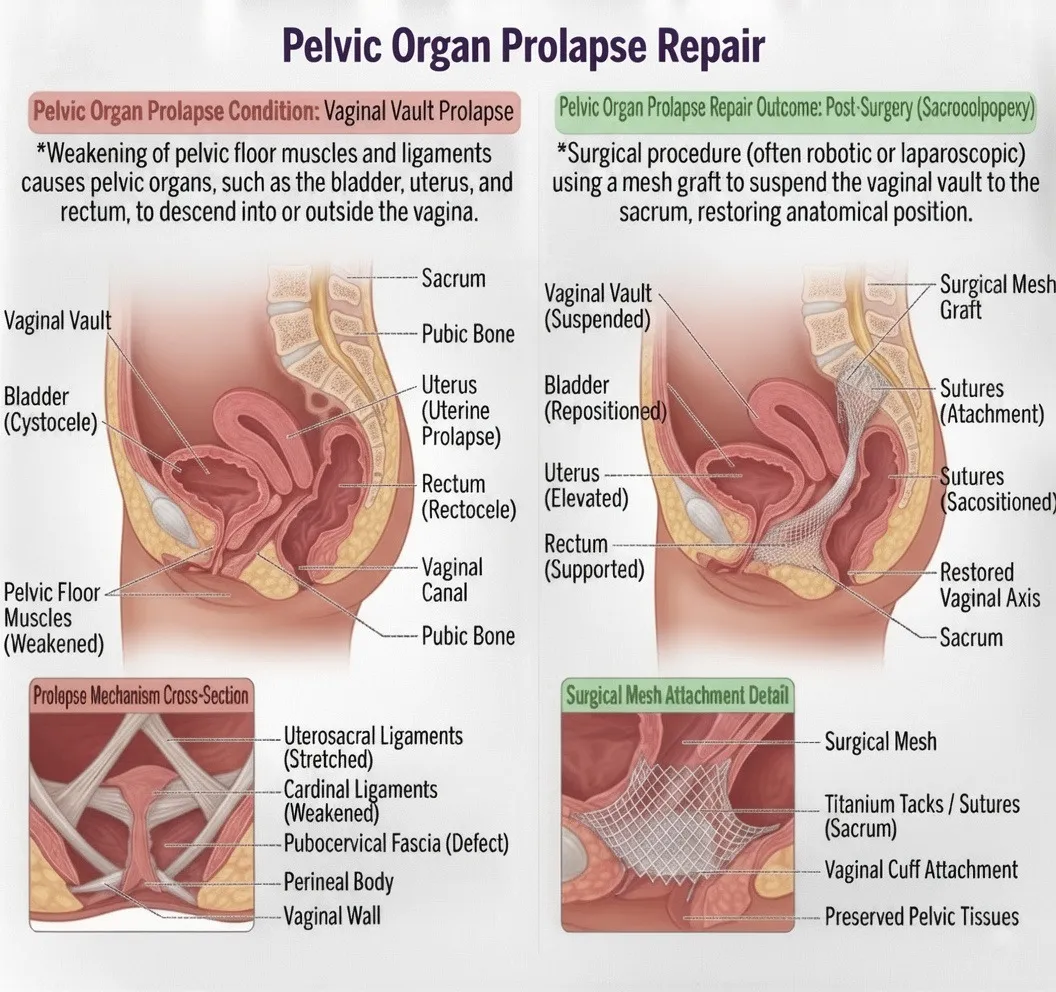
Pelvic Organ Prolapse (POP) occurs when pelvic floor muscles and supportive ligaments stretch and weaken, causing pelvic organs—such as the uterus, bladder (cystocele), or rectum (rectocele)—to drop from their normal positions and bulge into the vaginal canal. Surgery repairs these support structures using native tissue re-anchoring or surgical mesh.
Who Needs Prolapse Repair Surgery?
Surgery is indicated for symptomatic moderate-to-severe prolapse that interferes with daily living and fails conservative treatments like pelvic floor muscle training (Kegels) or vaginal pessaries.
Key clinical indicators include:
- A visible or felt bulge/lump protruding outside the vaginal opening.
- Persistent heaviness, pulling, or aching sensation in the lower pelvis or back.
- Urinary symptoms: difficulty starting stream, incomplete emptying, or stress incontinence.
- Bowel symptoms: difficulty evacuating stool without manual vaginal pressure (splinting).
- Discomfort during walking, prolonged standing, or sexual intercourse.
Types of Prolapse Repair Surgery
- Anterior Repair (Colporrhaphy): Tightening pelvic fascia to fix a bulging bladder (Cystocele).
- Posterior Repair (Colporrhaphy): Repairing vaginal wall fascia to fix a bulging rectum (Rectocele).
- Sacrocolpopexy / Sacrohysteropexy: Laparoscopic/robotic suspended mesh repair anchoring the vagina or uterus to the sacral bone.
- Uterine-Preserving Prolapse Repair: Surgical suspension preserving the uterus in younger women.
- Vaginal Hysterectomy with Vault Suspension: Removal of a prolapsed uterus paired with upper vaginal fixation.
Benefits of Prolapse Repair
- Elimination of vaginal bulging and anatomical protrusion.
- Restoration of normal bladder, bowel, and sexual function.
- Immediate relief from pelvic heaviness and lower back ache.
- Long-term durable support using advanced suture and suspension methods.
What to Expect Before Surgery?
Pre-operative preparation ensures proper surgical planning:
- Urodynamic Testing: Evaluating bladder function to detect hidden stress urinary incontinence.
- Pelvic Examination & Staging: Grading prolapse severity (POPQ classification).
- Pre-Op Clearance: Blood tests, ECG, and chest X-ray for anesthesia safety.
- Bowel Preparation: Light laxative routine the day prior to surgery.
Complete Procedure
For a typical laparoscopic sacrocolpopexy / apical repair:
- Administration of general or regional spinal anesthesia.
- Placing small laparoscopic ports in the abdominal wall.
- Dissecting the tissue planes between the vagina, bladder, and rectum.
- Attaching a Y-shaped biomorphic mesh or strong natural tissue ligament to the anterior and posterior vaginal walls.
- Securing the upper arm of the mesh/ligament to the sacral promontory periosteum (bone ligament) for strong upward suspension.
- Covering the mesh with peritoneum tissue to prevent bowel contact.
- Checking bladder integrity via cystoscopy if needed.
- Closing keyhole abdominal ports and placing a temporary vaginal pack/catheter.
What to Expect During Surgery?
Surgery lasts between 1.5 to 3 hours depending on the combination of repairs needed. Urinary catheter and vaginal packing are typically removed on post-op Day 1.
Native Tissue Repair vs Sacrocolpopexy
| Feature | Vaginal Native Tissue Repair | Laparoscopic Sacrocolpopexy |
|---|---|---|
| Approach | Vaginal approach (no abdominal scars). | Laparoscopic keyholes on abdomen. |
| Material | Patient's own tissues/suturing. | Permanent mesh strip to sacrum. |
| Durability | Good for moderate prolapse. | Gold standard for high durability & apical prolapse. |
| Recovery | 3 to 4 Weeks. | 2 to 3 Weeks. |
Success Rate and Safety
Pelvic organ prolapse repair yields high satisfaction rates (85-90%). Modern laparoscopic sacrocolpopexy offers long-term success rates exceeding 90-95% for apical uterine/vault support.
Prolapse Repair Cost Estimate
| Procedure Type | Estimated Cost Range (INR) |
|---|---|
| Vaginal Colporrhaphy (Anterior / Posterior) | ₹1,20,000 - ₹2,00,000 |
| Vaginal Hysterectomy + Prolapse Repair | ₹1,50,000 - ₹2,50,000 |
| Laparoscopic / Robotic Sacrocolpopexy | ₹2,00,000 - ₹3,20,000 |
Disclaimer: Final cost depends on procedural combination (repair + hysterectomy), mesh usage, and hospital stay.
Recovery Guide & Post-Operative Care
Recovery Timeline
- Day 1-2: Catheter removal; light walking; soft diet initiation.
- Week 1-2: Rest at home; avoid standing for long periods; manage constipation.
- Week 3-4: Resume light desk duties; gentle daily walking.
- Week 6-8: Return to full normal activities, sports, and sexual activity after clinical clearance.
Post-Op Precautions & Care
- Avoid Straining: Take stool softeners to prevent constipation and strain during bowel movements.
- Lifting Restriction: Absolutely no heavy lifting (>5 kg) for 3 months to safeguard repair integrity.
- Pelvic Rest: No tampons, douching, or sexual intercourse for 6 to 8 weeks.
Frequently Asked Questions
Is it necessary to remove the uterus during prolapse surgery?⌄
No. If the uterus is healthy, uterine-preserving procedures like laparoscopic sacrohysteropexy can suspend the uterus without removing it.
How long does the surgical repair last?⌄
Laparoscopic mesh sacrocolpopexy has a high long-term success rate exceeding 90%. Avoiding heavy lifting and constipation helps maintain results for life.
Will I need a urinary catheter after surgery?⌄
A urinary catheter is usually placed during surgery and removed the next morning before discharge.
When can I return to work?⌄
Most women return to desk jobs within 2 to 3 weeks, while those with physically demanding jobs need 6 to 8 weeks.