





What is Septoplasty?
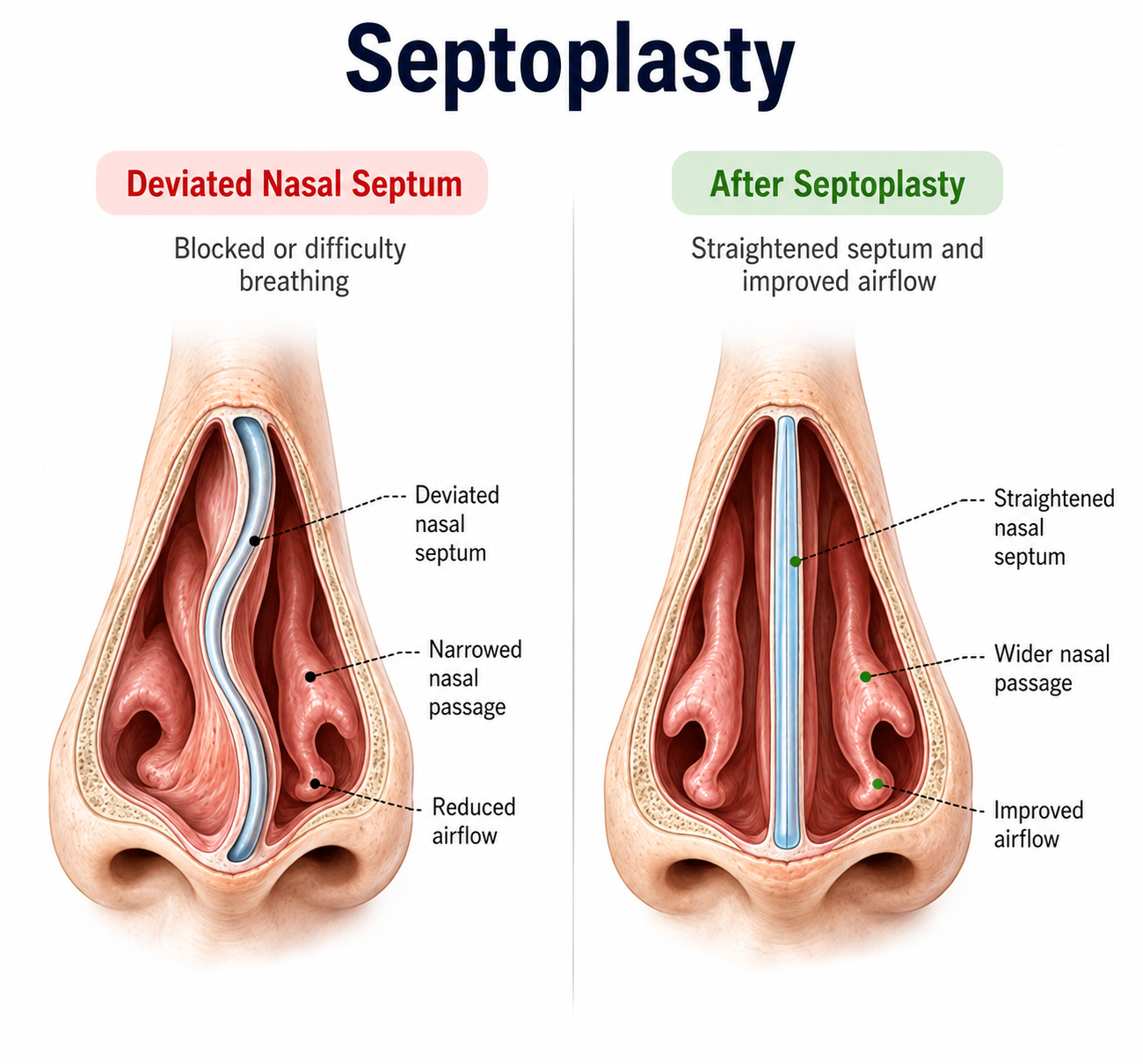
Septoplasty is a specialized surgical procedure designed to correct a deviated nasal septum—the internal partition of bone and cartilage that divides the nasal cavity into two nostrils. When the septum is significantly crooked or off-center, it reduces airflow, causes chronic unilateral or bilateral nasal blockages, and impairs sinus drainage. Septoplasty reshapes, repositionings, or excises crooked cartilage and bone without altering the external cosmetic appearance of the nose.
Who Needs Septoplasty?
Septoplasty is indicated when nasal septal deviation causes functional airway obstruction that fails to respond to nasal steroid sprays, antihistamines, or nasal decongestants.
Key clinical indicators include:
- Chronic nasal congestion or blockage in one or both nostrils.
- Recurrent sinus infections (sinusitis) secondary to obstructed sinus drainage channels.
- Frequent, unexplained nosebleeds (epistaxis) caused by mucosal dryness over the septal spur.
- Loud snoring, mouth breathing, or sleep disruption due to reduced nasal airflow.
- Persistent facial pressure or headaches associated with contact point pain inside the nasal cavity.
Types & Surgical Approaches
- Traditional Endonasal Septoplasty: Internal incision made entirely within the nostril; cartilage and bone are reshaped or trimmed.
- Endoscopic Septoplasty: Utilizes a high-definition endoscope for magnified visualization of deep septal spurs, allowing minimal tissue elevation.
- Septorhinoplasty: Combines septoplasty with cosmetic or functional reshaping of the external nose structure.
- Septoplasty with Turbinate Reduction: Performed alongside radiofrequency or submucosal resection of swollen nasal turbinates to maximize airway space.
Benefits of Septoplasty
- Restoration of clear, effortless nasal breathing through both nostrils.
- Significant reduction in snoring, daytime fatigue, and sleep-disordered breathing.
- Improved sinus ventilation and reduced frequency of chronic sinus infections.
- Decrease in recurrent nosebleeds caused by air turbulence over crooked cartilage.
What to Expect Before Surgery?
Proper pre-operative evaluation ensures structural precision and patient safety:
- Diagnostic Evaluation: Diagnostic nasal endoscopy and high-resolution CT scan of the paranasal sinuses.
- Medication Restrictions: Discontinue blood thinners, aspirin, and non-steroidal anti-inflammatory drugs 10 days before surgery.
- Pre-Op Fasting: Refrain from eating or drinking for 6 to 8 hours prior to anesthesia.
- Nasal Prep: Treat active nasal infections or severe allergic flare-ups prior to the surgical date.
Complete Procedure
Septoplasty is performed entirely through the nostrils under general or local anesthesia in 45 to 75 minutes:
- Administration of general anesthesia and topical decongestant packs inside the nasal cavity.
- Making a hidden incision (Freer or Killian incision) in the nasal mucosa inside the nostril.
- Elevating the mucoperichondrial flap away from the underlying cartilage and bone.
- Trimming, reshaping, or straightening crooked cartilage and bony spurs.
- Repositioning the straightened septum into the midline alignment.
- Closing the mucosal incision with absorbable sutures and inserting nasal splints or soft packing if needed.
What to Expect During Surgery?
The patient is completely unconscious during the 60-minute procedure. Surgical entry is entirely intranasal, leaving no external visible cuts or facial scars.
Endoscopic Septoplasty vs Traditional Septoplasty
| Feature | Traditional Septoplasty | Endoscopic Septoplasty |
|---|---|---|
| Visualization | Direct headlight visualization. | High-definition magnified endoscopic camera view. |
| Precision | Broad elevation of mucosal flaps. | Targeted flap elevation localized to the deformity. |
| Tissue Trauma | Moderate tissue trauma; splints often required. | Minimal tissue disruption; often splintless. |
| Post-Op Recovery | Mild to moderate nasal congestion for 1-2 weeks. | Faster recovery with minimal post-op congestion. |
Success Rate and Safety
Septoplasty has an overall success rate exceeding 85-90% in significantly improving nasal breathing and patient satisfaction. Complications like septal hematoma, infection, or perforation are rare (<2%).
Septoplasty Cost Estimate
| Surgical Option | Conventional Technique (INR) | Endoscopic / Advanced Technique (INR) |
|---|---|---|
| Standalone Septoplasty | ₹40,000 - ₹75,000 | ₹60,000 - ₹1,10,000 |
| Septoplasty + Turbinate Reduction | ₹55,000 - ₹95,000 | ₹75,000 - ₹1,35,000 |
| Functional Septorhinoplasty | ₹90,000 - ₹1,60,000 | ₹1,20,000 - ₹2,20,000 |
Disclaimer: Final cost varies according to hospital facilities, room category, splint materials, and combined procedures.
Recovery Guide & Post-Operative Care
Recovery Timeline
- Day 1-2: Discharge from hospital; mild nasal oozing and fullness; soft nasal packing/splints in place.
- Day 3-7: Splints or packings removed in clinic; regular saline nasal rinses initiated; congestion improves.
- Week 2-3: Internal swelling subsides significantly; return to work and light daily routines.
- Month 1-3: Complete mucosal healing and final stabilization of internal septum.
Post-Op Precautions & Care
- Saline Rinses: Use isotonic saline nasal sprays or Neti pots diligently to clear crusts and mucous.
- Sneeze with Open Mouth: If you need to sneeze, do so with an open mouth to prevent pressure buildup in nasal passages.
- Avoid Nose Blowing: Refrain from blowing your nose forcefully for at least 10 to 14 days post-surgery.
- Activity Restrictions: Avoid heavy lifting, strenuous workouts, or bending over for 2 weeks.
Frequently Asked Questions
Will septoplasty change the external shape of my nose?⌄
No. Standard septoplasty is performed entirely inside the nostrils and does not alter the external shape. If cosmetic changes are desired, a septorhinoplasty is performed.
Is septoplasty painful?⌄
Post-operative pain is typically mild to moderate and easily managed with prescribed oral pain medications. Most patients report pressure and congestion rather than severe pain.
When are nasal splints or packing removed?⌄
If nasal packings or splints are used, they are typically removed by your ENT specialist within 24 to 72 hours or up to 7 days post-surgery.
When can I blow my nose after septoplasty?⌄
You should avoid blowing your nose for at least 10 to 14 days after surgery to prevent bleeding and mucosal displacement.
How long does full recovery take?⌄
Most patients return to work within 7 to 10 days. Internal mucosal healing continues over 4 to 6 weeks.