









What is Tonsillectomy & Adenoidectomy?
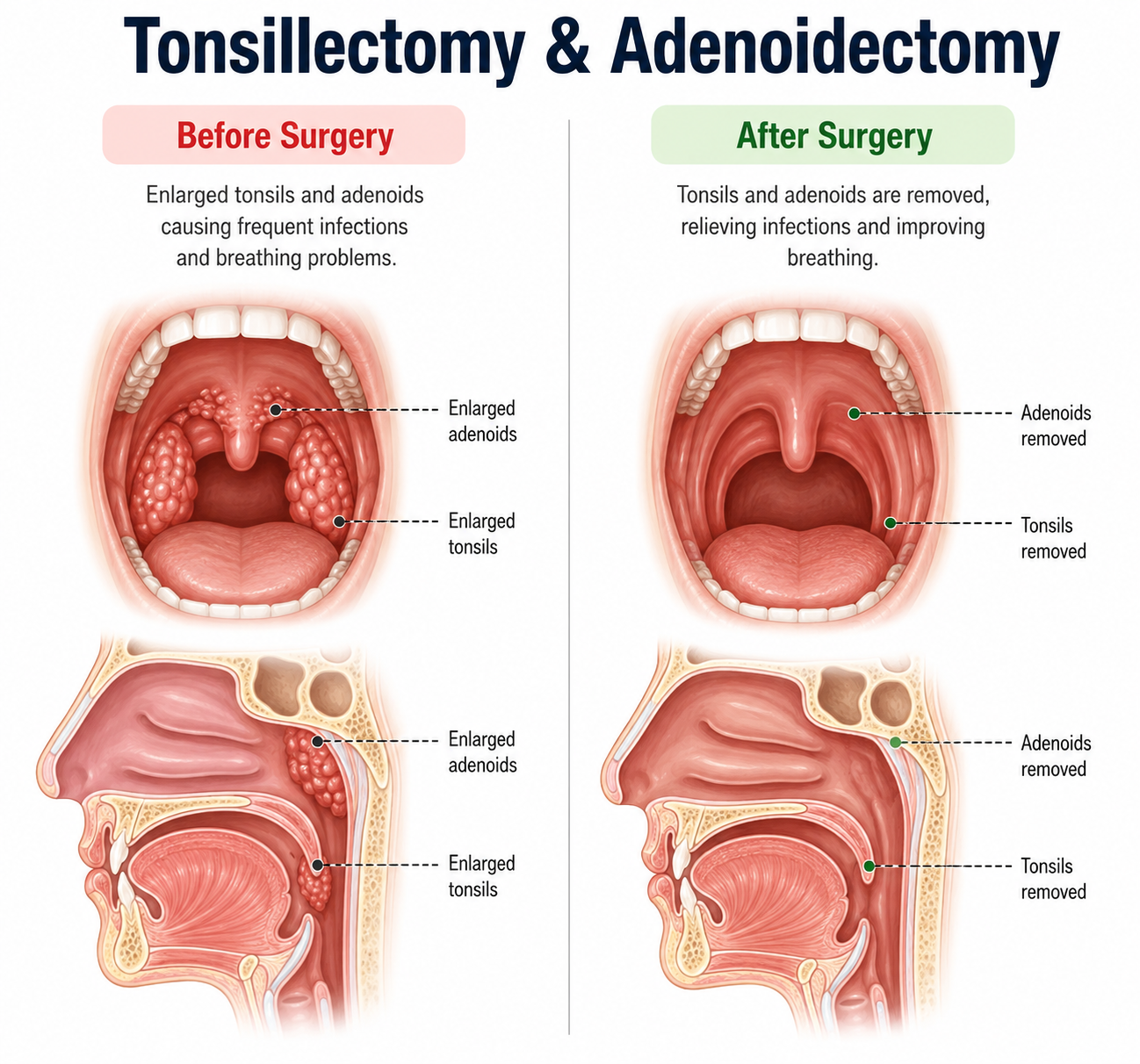
Tonsillectomy is the surgical removal of the palatine tonsils, while adenoidectomy involves the removal of the adenoid tissue located at the back of the nasal cavity. These lymphatic tissues play an immune role in early childhood but can become persistent reservoirs for chronic infection or enlarge to cause severe airway obstruction. Removing them restores clear upper airway passages and eliminates chronic infection niduses without compromising systemic immunity.
Who Needs Tonsillectomy & Adenoidectomy?
Surgery is indicated when non-surgical management fails to control chronic infections or when airway obstruction impairs breathing and sleep quality.
Key clinical indicators include:
- Recurrent acute tonsillitis (e.g., 7+ episodes in 1 year, or 5+ annually for 2 consecutive years).
- Obstructive Sleep Apnea (OSA) with loud snoring, breathing pauses, or restless sleep patterns.
- Chronic adenoid hypertrophy causing persistent mouth breathing, nasal obstruction, or facial growth alterations.
- Recurrent otitis media (middle ear infections) or persistent fluid effusion due to Eustachian tube dysfunction.
- Peritonsillar abscess (quinsy) or suspected tonsillar malignancy.
Types & Surgical Techniques
- Conventional Cold Knife Dissection: Manual removal using specialized dissectors and snares with tie or cautery hemostasis.
- Electrocautery Dissection: Uses thermal electrical energy to vaporize and cut tissue while sealing blood vessels.
- Coblation (Plasma) Surgery: Utilizes low-temperature radiofrequency plasma technology to dissolve tissue with minimal collateral thermal damage.
- Intracapsular (Partial) Tonsillectomy: Removes 90-95% of tonsillar tissue while retaining a thin tissue shield over underlying throat muscles to reduce post-operative pain.
Benefits of Tonsillectomy & Adenoidectomy
- Marked reduction or complete elimination of recurrent bacterial throat infections.
- Relief from upper airway obstruction, sleep apnea, and snoring.
- Restoration of restorative sleep, leading to improved daytime focus and energy.
- Decreased incidence of secondary middle ear and sinus infections.
What to Expect Before Surgery?
Preparation ensures patient safety and smooth surgical recovery:
- Medical Clearance: Blood work (CBC, clotting panel PT/INR) and pediatric/cardiac evaluation.
- Medication Adjustments: Discontinue blood-thinning agents and NSAIDs (aspirin, ibuprofen) 10-14 days prior to surgery.
- Fasting Rules: Fast completely from food and clear liquids for 6 to 8 hours before the scheduled procedure.
- Post-Op Prep: Purchase soft foods, cold liquids, ice packs, and prescribed analgesics in advance.
Complete Procedure
The surgical procedure is performed under general anesthesia and typically takes 30 to 60 minutes:
- Administration of general anesthesia with oral endotracheal intubation.
- Insertion of a mouth gag instrument to maintain an unobstructed view of the pharynx.
- Precision removal of the palatine tonsils from their underlying muscular fascia.
- Curettage or coblation-assisted ablation of the hypertrophied adenoid tissue in the nasopharynx.
- Strict hemostasis control using bipolar cautery or topical hemostatic packings.
- Suctioning of the airway, removal of instruments, and emergence from anesthesia.
What to Expect During Surgery?
The procedure lasts approximately 30 to 45 minutes in the operating room. The patient remains completely unconscious and pain-free. Continuous cardiac, pulse oximetry, and blood pressure monitoring are conducted throughout.
Coblation vs Traditional Electrocautery
| Feature | Traditional Cautery | Coblation Surgery |
|---|---|---|
| Operating Temperature | High heat (200°C–400°C). | Low temperature plasma (40°C–70°C). |
| Collateral Thermal Injury | Moderate to deep thermal penetration. | Minimal surrounding tissue disruption. |
| Post-Operative Pain | Moderate to severe throat pain. | Significantly lower post-op pain scores. |
| Recovery & Normal Diet | Takes 10 to 14 days. | Faster return to normal soft diet (5–8 days). |
Success Rate and Safety
Tonsillectomy and adenoidectomy demonstrate a high success rate (>95%) in resolving airway obstruction and frequent infections. The risk of major complications, such as post-operative hemorrhage, is low (1–3%) and manageable with standard surgical protocols.
Tonsillectomy & Adenoidectomy Cost Estimate
| Procedure Variation | Conventional Surgery (INR) | Coblation / Advanced Technique (INR) |
|---|---|---|
| Tonsillectomy Alone | ₹35,000 - ₹65,000 | ₹50,000 - ₹85,000 |
| Adenoidectomy Alone | ₹30,000 - ₹55,000 | ₹45,000 - ₹75,000 |
| Combined Tonsillectomy & Adenoidectomy | ₹45,000 - ₹85,000 | ₹65,000 - ₹1,20,000 |
Disclaimer: Final costs depend on hospital stay, room category, patient age, surgeon experience, and anesthesia requirements.
Recovery Guide & Post-Operative Care
Recovery Timeline
- Day 0-1: Recovery room observation; cold liquids and popsicles provided.
- Day 2-5: Peak sore throat and referred ear discomfort; strict soft, bland diet.
- Day 6-10: White surgical scabs begin to slough off; potential transient spot bleeding; pain begins to subside.
- Day 11-14: Healing of the throat bed; resumption of regular solid foods and return to school/work.
Post-Op Precautions & Care
- Hydration: Maintain constant liquid intake (water, cold juices, electrolyte solutions) to keep throat tissues moist.
- Dietary Strictness: Avoid hard, crunchy, sharp, spicy, or hot foods that could dislodge healing scabs.
- Pain Management: Administer prescribed analgesics on a fixed schedule as advised by your physician.
- Emergency Sign: Immediately contact your hospital or visit the ER if active red blood is seen in the mouth or vomit.
Frequently Asked Questions
Is coblation tonsillectomy better than conventional surgery?⌄
Coblation uses low-temperature plasma technology, resulting in reduced thermal damage to throat muscles, lower post-operative pain, and a faster return to normal eating habits.
Will removing tonsils lower my immunity?⌄
No. The tonsils are only a small component of the lymphatic system. Hundreds of other lymph nodes take over, and clinical studies show no negative impact on overall immunity.
Why do ears hurt after tonsillectomy?⌄
Referenced otalgia (ear pain) is common because the glossopharyngeal nerve shares sensory pathways between the throat and ear canal.
What foods can be eaten after surgery?⌄
Cold, soft, non-acidic foods like ice cream, yogurt, mashed potatoes, chilled soups, and smoothies are ideal during the first 7 to 10 days.
How many days off work or school are required?⌄
Most patients require 10 to 14 days of recovery before safely returning to school, work, or strenuous physical activities.